Post Transplant Medications
At the time of discharge, patients are generally prescribed 10-15 medicines, some of these may be injections. As they make progress, the number of drugs are reduced and at about 1 year, most patients are on 1- 2 anti-rejection medicines and those for pre-existing illnesses. Patients and their families should familiarize themselves with the medicines prescribed.
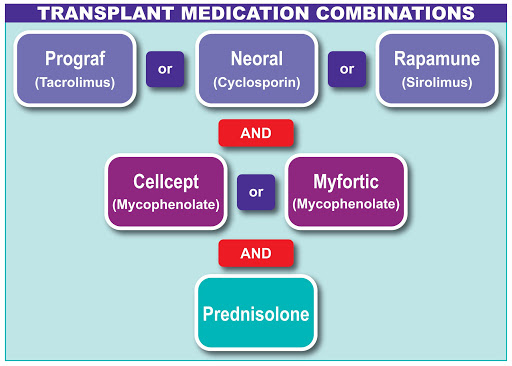
1) Anti-rejection ( Immunosuppression ) medications : to lower the immune response, thus preventing rejection of the newly transplanted pancreas. These have to be taken life-long. Failure to take these medicines may lead to rejection even many years after transplant
2) Drugs to prevent complications and side effects : Antacids, antibiotics, antifungals & blood thinning medicines
3) Supplements : Vitamins, Calcium, Magnesium etc.
4) Drugs for pre-existing illnesses : Anti-asthmatic, thyroid and anti-hypertensive medicines
 Medications should be taken at fixed time of the day and their doses, frequency or duration should never be changed unless advised by the transplant team.
Drug levels of anti-rejection medicines (Tacrolimus, cyclosporine, Sirolimus) will be monitored regularly; this is to ensure desired results and avoid any side-effects.
Failure to take prescribed medicines is dangerous and is the most common reason for rejection and failure of newly transplanted pancreas (and kidney).
Patients should not self-medicate with over-the-counter medicines, even for small problems such as cough, cold, fever, loose motions etc. because these medicines may interact with immunosuppressants.